Article content
Introduction
The scaffolding and formwork industry still relies heavily on paper, spreadsheets, WhatsApp messages, and disconnected manual processes. That may be manageable in a very small operation, but it becomes a serious problem as a company grows.
Materials go missing, jobs run over, equipment sits on site without being billed, and managers only discover the damage weeks later when it is too late to recover the loss. In many cases, profits are not lost in one big moment. They are lost through small daily issues that build up over time.
This is where cloud-based systems make a real difference. A platform like CloudScaff gives scaffolding companies one connected system for yard, site, and office, making it easier to control equipment, reduce admin, and protect profit.
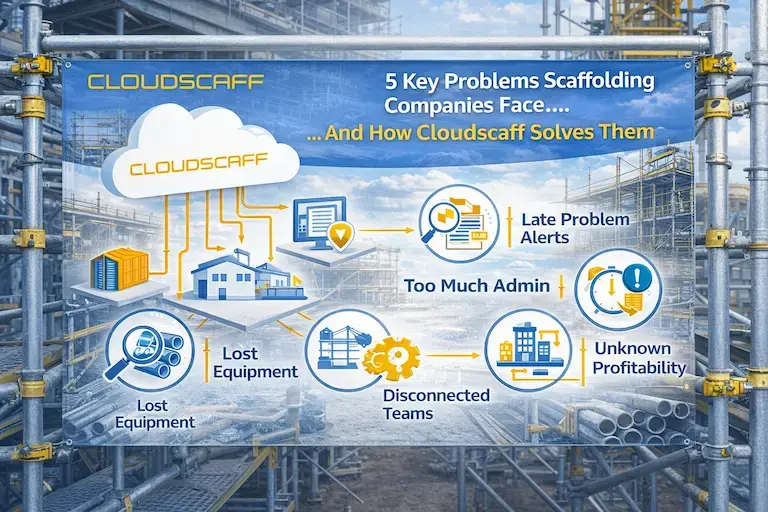
1. Not Knowing Where Your Equipment Is
One of the biggest challenges in scaffolding is simply knowing where equipment is at any given time. Materials move constantly between the yard, active sites, transfer routes, and off-hire projects.
Without a proper system, businesses often rely on:
- paperwork
- phone calls
- WhatsApp updates
- spreadsheets that are already out of date
That usually leads to a familiar set of problems:
- lost materials
- double hiring equipment
- buying or ordering stock you already own
- wasted time searching for items
How CloudScaff solves this
CloudScaff tracks equipment across yard, site, transfers, and hire activity in one system. Teams can see what is in the yard, what is on each site, what is on hire, and what is still in transit.
That real-time visibility gives managers better control over stock, reduces unnecessary replacement costs, and helps teams make faster decisions with confidence.
2. Finding Out About Problems Too Late
Many scaffolding companies only discover operational problems once a job has already finished. By then, the damage has already been done and the margin has already been lost.
Typical examples include:
- missing materials
- damaged equipment
- jobs that ran over time
- sites still holding equipment that is no longer being billed
The issue is not only that these problems happen. The real cost comes from discovering them too late to fix them.
How CloudScaff solves this
CloudScaff tracks deliveries, returns, and site balances as they happen. That means managers can quickly compare:
- what was delivered versus what was returned
- which sites are above planned quantities
- which jobs are running longer than expected
- where equipment is missing or delayed
Instead of waiting until month end or job closeout, companies can identify issues while the project is still active and take corrective action before profit disappears.
3. Too Much Paper and Admin
Scaffolding businesses often carry a heavy admin burden because core processes still depend on paper and manual capture. That usually includes:
- paper delivery notes
- paper pick lists
- Excel spreadsheets
- WhatsApp instructions
- manual reporting at month end
This creates extra office work and introduces more opportunities for mistakes. Staff spend time recapturing information instead of using it to manage the business properly.
How CloudScaff solves this
CloudScaff digitises the workflow from order creation through delivery, returns, and reporting. In practice, that means:
- orders are created in the system
- pick lists are generated automatically
- deliveries and returns are captured on mobile
- reports are generated without manual rework
The result is less paperwork, less duplicated admin, fewer capture errors, and more time spent on operational control instead of paper handling.
4. Yard, Site, and Office Are Not Connected
In many companies, the office, yard, and site teams all work in separate processes.
The office creates the order. The yard prepares materials. The driver delivers. The site signs paper. The office captures everything later.
When those teams are not working in one connected system, mistakes become almost inevitable:
- wrong materials are sent
- shortages are not reported properly
- returns are missed
- the office works with outdated information
How CloudScaff solves this
CloudScaff connects yard, site, and office in one shared system. Each team works from the same live information:
- the office creates the order
- the yard sees the pick list
- the driver records what was delivered
- the site records returns
- the office sees the updates immediately
This reduces communication gaps, improves accountability, and gives every part of the business a single source of truth.
5. Not Knowing Which Jobs Make Money
Many scaffolding companies stay busy all year but still struggle to answer basic commercial questions, such as:
- which jobs were actually profitable
- which customers are profitable
- where equipment losses are happening
- where time and margin are being lost
Revenue on its own does not tell the full story. A business can look busy and still lose money through poor visibility, stock loss, overruns, and untracked site balances.
How CloudScaff solves this
CloudScaff gives businesses better reporting and clearer visibility into what is happening on each project. That includes insights such as:
- equipment on each site
- contract quantities versus actual quantities
- overruns
- missing equipment
- damaged and scrap equipment
- stock value and replacement cost
With that information, management can see which jobs are performing well, which jobs are draining margin, and where operational changes are needed.
Why These Problems Matter
Most scaffolding companies do not lose money because of one major failure. They lose money through repeated operational leaks, including:
- a few missing items
- equipment not returned
- a job running a week too long
- hiring equipment you already own
- admin mistakes that distort the real picture
These issues are small in isolation, but together they have a direct impact on profitability, cash flow, and customer performance.
Conclusion
CloudScaff is designed to solve these day-to-day operational problems by giving scaffolding companies one connected system for yard, site, and office. With better visibility into equipment, deliveries, returns, site balances, and job performance, businesses gain stronger control over both operations and profit.
When you have better visibility, you have better control. And when you have better control, you protect your profit.