Back to Blogs
Previous article Next article

cloudscaff

Step-by-step guide to erecting scaffolding:

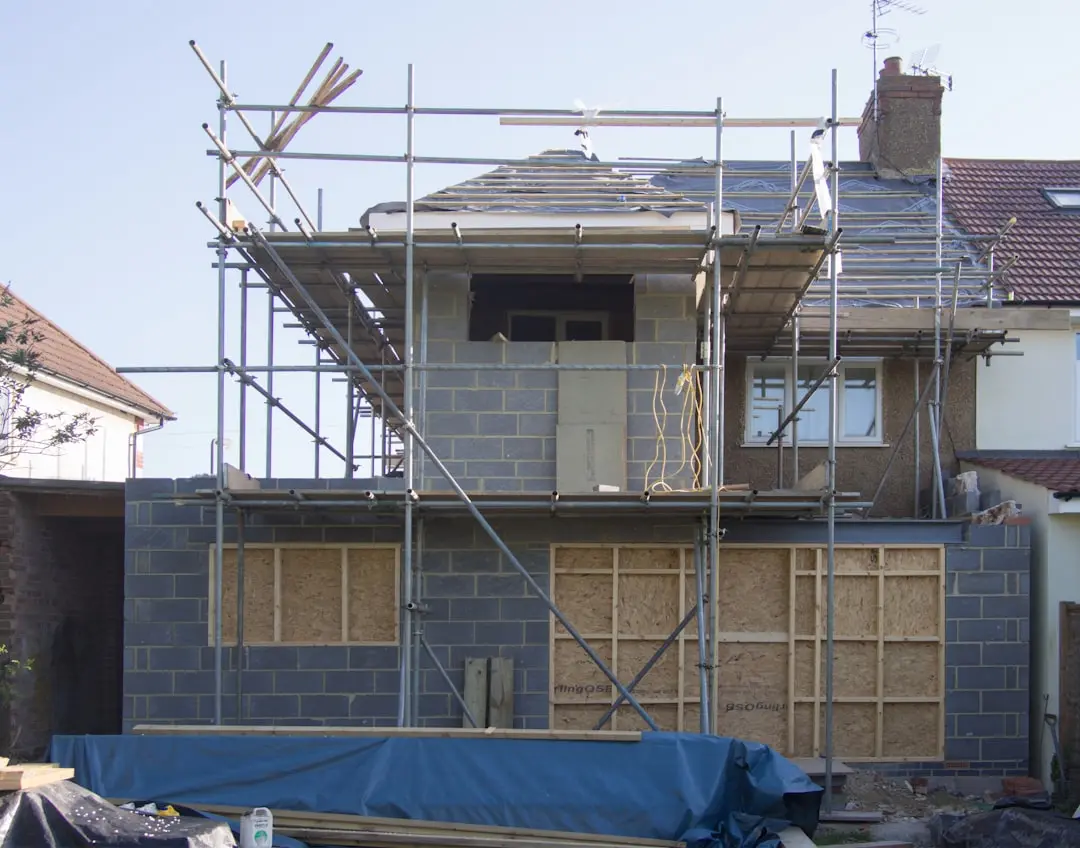
Erecting scaffolding requires careful planning and attention to safety to ensure a stable and secure work environment. In this guide, we will provide a step-by-step overview of the process for erecting scaffolding, including tasks such as aligning the scaffold with the building, placing and leveling sole plates, erecting and leveling bays, adding transverse and diagonal braces, and installing guardrails and toeboards. By following these steps, you can ensure that your scaffold is properly erected and ready for use.

Share

blue and white textile on brown concrete building during daytime
Photo by Brett Jordan on Unsplash

Article content

  1. Clearly define and barricade off the work area. Display signage indicating that scaffolding is being erected and is not yet safe for use.
  2. Count and check off the various parts against a delivery docket or order to ensure you have received the correct components.
  3. Align a length of scaffold tube vertically with the corner of the eaves, making sure the scaffolding is in line with the building.
  4. Lay out the parts for the first lift in roughly the positions of the sole plates. It is easier to place ledges and transoms between two sole plates than to measure.
  5. Place the sole plates in position, making sure they form a firm foundation. Level the sole plates if necessary, which may require excavating the ground underneath them.
  6. Use the base plate to compact down the sole plate. Check that the position of the sole plates and base plates are correct. Careful preparation at this stage will ensure a good foundation for the scaffold.
  7. Adjust the base plates to compensate for uneven ground, making sure to leave room for adjustment later.
  8. Erect the first bay, starting at the highest point. Insert the base plates into the standards on both sides. Working as a team, lift the standards and insert the transom into the lowest v connectors.
  9. On the other end of the bay, hold the standards in place and attach the ledges. Insert the final transom linking the standard.
  10. Level the bay using a spirit level, adjusting it with the base plate adjustment. Repeat this process on all four sides. Check the distance from the building and move the bay if necessary, using a lever rather than lifting it manually.
  11. Adjust the sole plates if needed, and check that the bay is square by measuring the diagonal dimensions of the bay or aligning the planks with the transom. Hammer in pins and wedges to make adjustments.
  12. Install and fix off the upper transom and ledges. The first bay is now complete.
  13. Erect the rest of the bays for the first lift, making sure they are level and aligned with the building. If broken or damaged components are found, set them aside and inform the higher company about the faulty equipment.
  14. Plank out the lift to form a working platform, and erect an access bay on the non-working face of the structure. Use a larger sole plate to distribute the load if necessary.
  15. Assemble the upper transoms and ledges for the access bay.
  16. Add transverse braces to the main scaffolding to prevent it from distorting or swaying as each lift is added.
  17. Assemble the rest of the lifts, using diagonal braces to provide stability.
  18. Install the stairs system inside the access bay to provide easy access to the scaffold.
  19. Attach guardrails and toeboards for safety.
  20. Inspect the completed scaffold to ensure it is safe and secure for use.

Summary: 

This is a step-by-step guide for erecting scaffolding, including tasks such as aligning the scaffold with the building, placing and leveling sole plates, erecting and leveling bays, adding transverse and diagonal braces, and installing guardrails and toeboards.


Topics

Share

Next Steps

Keep the momentum moving after this article.

Explore more guidance, see the platform in action, or speak with CloudScaff about improving scaffold operations.

Explore more blogs

Keep reading practical articles about scaffold safety, operations, and growth.

Learn more

View product features

See how CloudScaff helps teams manage inventory, workflow, and site visibility.

Learn more

Book a demo

Walk through the platform with the team and see how it fits your process.

Open link

Contact CloudScaff

Ask questions about implementation, pricing, or your scaffolding workflow.

Learn more

Keep Reading

red hard hat on pavement\

cloudscaff

2 min read

Scaffold Safety Gets a Tech Upgrade: How Innovations Are Improving Worker Protection

As anyone who has worked in the scaffolding industry knows, safety is of the utmost importance. Falls from scaffolds can result in serious injury or even death, making it crucial to have systems in place to prevent accidents from occurring. That's where scaffold safety technology comes in. From fall prevention systems to intelligent scaffolding systems, there are a number of innovative technologies that are helping to improve worker protection on construction sites. In this blog post, we'll take a closer look at some of these technologies and how they are making a difference in the scaffolding industry.

white and gray optical illusion

cloudscaff

4 min read

The Future of Scaffolding: The Benefits of Advanced Materials

If you're in the scaffolding industry, you know that weight and durability are major concerns when it comes to choosing the right materials for your projects. Traditional materials like steel and wood are reliable, but they can be heavy and prone to wear and tear. That's why many companies are turning to advanced materials like carbon fiber, aluminum, and fiberglass as a way to improve the performance of their scaffolding systems. So, what exactly makes these materials so special? And how can they benefit your business? Let's dive in and explore the benefits of advanced scaffold materials.

brown wooden stand with black background

cloudscaff

6 min read

Scaffold Collapse: A Legal Guide for Scaffolding Companies

Accidents happen, and unfortunately, sometimes those accidents involve scaffolding collapses. If you own a scaffolding company, it's important to be prepared for the legal process that may follow such an incident. In this blog post, we'll guide you through what to expect and how to navigate the legal system in the event of a scaffold collapse that injures someone.

Previous and next articles

Book a 20-min walkthrough